
Last Updated: 27 August 2026
Choosing the right seat cover material comes down to three things: how you use your vehicle, how much maintenance you’re willing to do, and whether you’re protecting a work bakkie or a family SUV. The three main materials on the South African market are canvas, leather, and neoprene, and each performs differently.
What Are the Three Main Seat Cover Materials?
Canvas
Canvas is tough, hard-wearing fabric that resists tearing and puncturing better than most alternatives, and it won’t shrink or stretch out of shape over time. It’s UV-stable, which matters under South African sun. The trade-off is that canvas absorbs liquids more readily than neoprene unless it has a protective coating, and its rougher texture doesn’t mould to a seat’s shape the way neoprene does.
Leather
Leather is a premium material that can genuinely lift a vehicle’s resale value when it’s well maintained. But “well maintained” is doing a lot of work in that sentence, leather needs periodic conditioning to stop it cracking, and it’s more prone to scratches and general wear than neoprene. For families with kids or pets, it’s often not the most practical choice.
Neoprene
Neoprene, the same material used in wetsuits, is UV-stable, resistant to abrasion and chemicals, and highly water-resistant. It doesn’t need conditioning the way leather does, and it naturally resists sun fading. It’s also generally the more budget-friendly option of the three. The one trade-off: neoprene can hold heat in direct sun, though this is less of an issue with regular air conditioning use.
How Do I Match the Right Material to My Vehicle and Use Case?
Work bakkies and daily drivers
If your bakkie sees muddy boots, dusty roads, or job-site conditions daily, neoprene is the practical choice. It’s waterproof, doesn’t need maintenance, and custom-fit neoprene seat covers are cut to your exact model rather than sitting loosely like a universal cover.
Family vehicles
For SUVs and family bakkies carrying kids, pets, or groceries regularly, neoprene’s water resistance and easy wipe-down cleaning make it a low-effort option compared to canvas or leather.
Resale-focused buyers
If resale value is the priority and you’re committed to the maintenance leather requires, it can be worth the investment. For most daily-use vehicles, though, protecting the factory upholstery underneath, regardless of what covers it, matters more for resale than the seat cover material itself.
What Other Features Should I Check Beyond Material?
A snug, model-specific fit matters as much as the material itself. Universal covers shift and bunch regardless of what they’re made from. Look for covers cut for your exact vehicle, with practical additions like front and rear storage pockets.
Frequently Asked Questions
What is the best seat cover material for South Africa?
Neoprene is the best all-round choice for South African conditions. It’s UV-stable, water-resistant, and needs no conditioning or special maintenance, unlike leather.
Are neoprene seat covers as durable as canvas?
Canvas has a slight durability edge for resisting tears and punctures, but neoprene closes that gap with better water resistance and zero maintenance requirements.
Do I need to maintain neoprene seat covers?
No. Unlike leather, neoprene doesn’t need conditioning. Wipe down or rinse as needed.
Find the Right Seat Covers for Your Vehicle
Browse Damishq’s full seat cover range or see our guide to seat covers for bakkies.
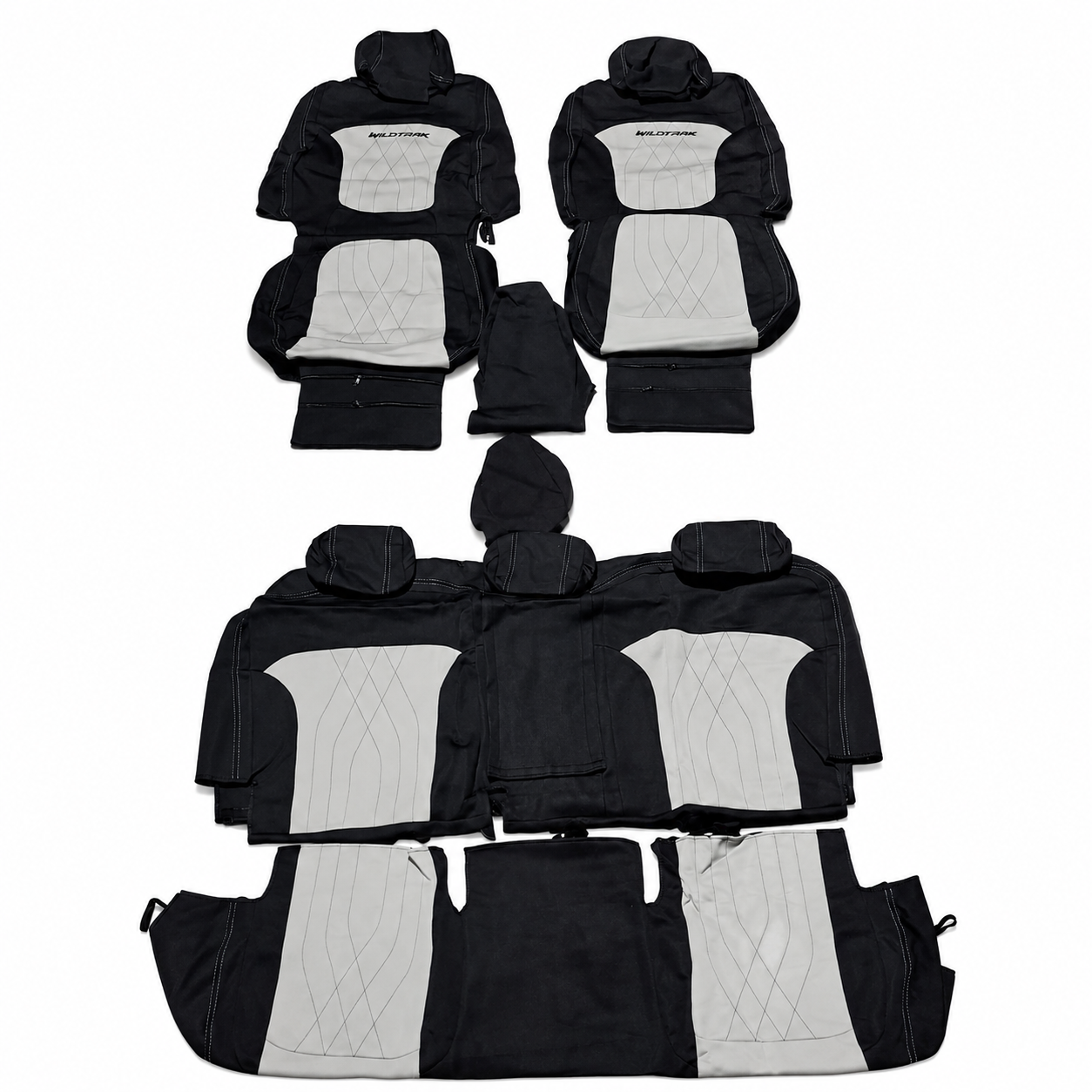
Example Neoprene Seat Cover Sets
A few examples of what a custom-fit neoprene set looks like:
- Ford Ranger Next Gen DC Neoprene Seat covers (5 Seats)
- Nissan Navara DC Neoprene Seat covers (5 Seats)
- Isuzu DMax Gen6 DC Neoprene Seat covers (5 Seats)
This post is part of our Complete Guide to Seat Covers in South Africa.